
Who Was Andrew Zilker?
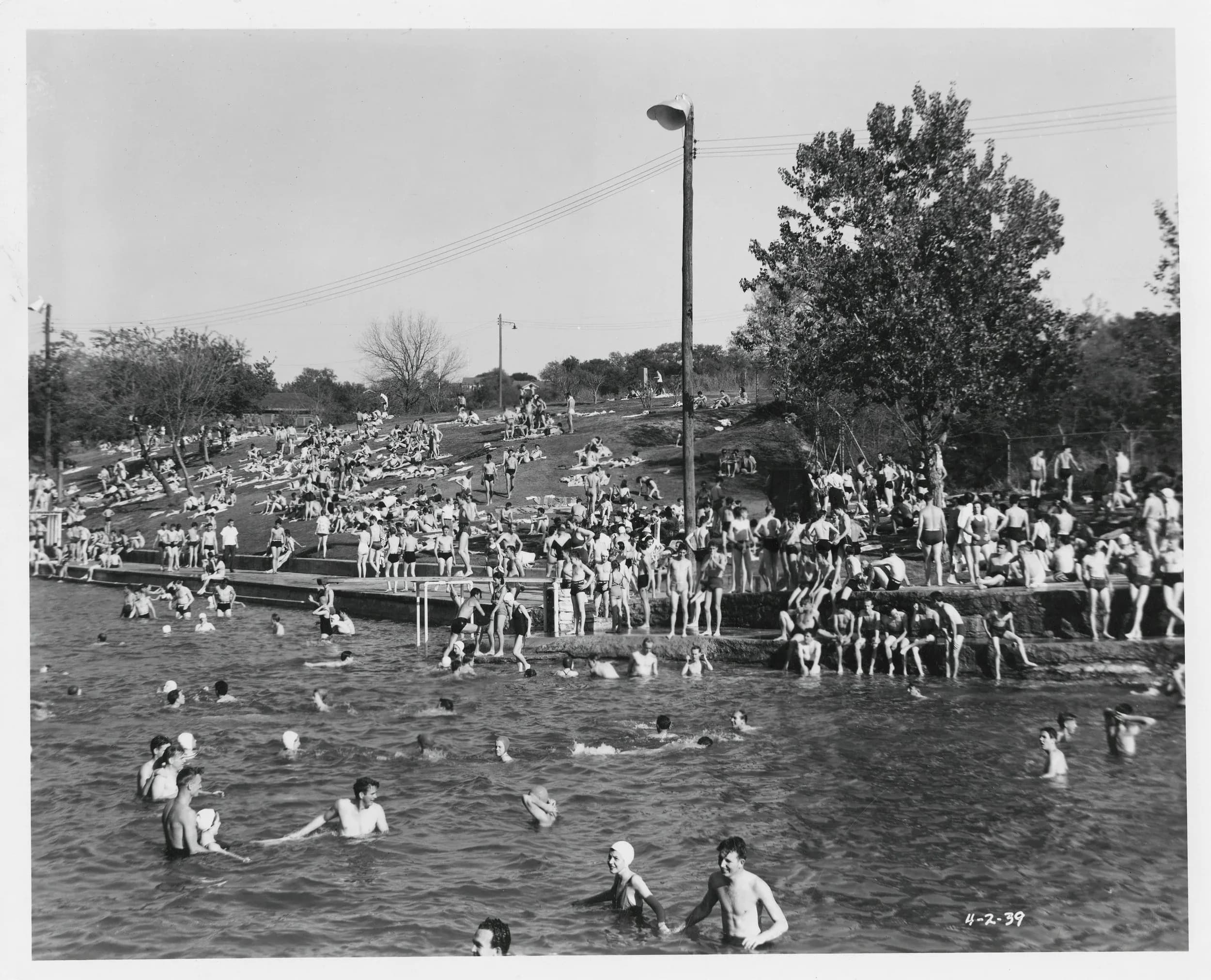
Andrew Zilker's name is on Austin's most beloved park, on signs, maps and summer plans all over town. Plenty of people who swim, picnic and fly kites there every week couldn't tell you much about the man behind the name. Here is a short profile: who he was, how he came to own the land around Barton Springs, and why he gave it to Austin.
The short answer
Andrew Jackson Zilker was an Austin businessman who made his fortune in ice. In the early 1900s he bought the land along the Colorado River and Barton Creek that included Barton Springs, and beginning in 1917 he gave that land to the people of Austin. The park was officially named Zilker Park in 1934, the same year he died. As he put it, the park "ought to belong to all the people of Austin."
From fifty cents to Lone Star Ice Works
The story goes that Zilker arrived in Austin in 1876, an eighteen-year-old with fifty cents in his pocket. He washed dishes at local restaurants, then took a job at a riverside ice factory. Within three months he was leasing the whole plant. By 1885, with backing from John T. Brackenridge, he had renamed it Lone Star Ice Works, and it grew into one of the most successful businesses in the state.
Factory-made ice was a hard sell back then. Much of the public trusted only "natural" ice: frozen lake blocks shipped down from the North by rail, packed in sawdust. So Zilker staged a demonstration on Congress Avenue. He lined up the shipped-in natural ice on one side of the street and his own manufactured ice on the other, and let onlookers watch the natural ice melt into puddles long before his did.
He was also Austin's first Coca-Cola bottler, running the first Coca-Cola bottling and distribution plant in Central Texas.
The land around Barton Springs
In the early 1900s, Zilker bought the 350-acre floodplain along the Colorado River and Barton Creek that included Barton Springs. He put the fertile land to practical use, raising hay there to feed the horses that powered his ice business. The ice itself was made from the cool waters of Barton Springs.
He also saw it as a place to gather. At Eliza Springs he built a pool and an amphitheater for his fellow Elks Club members, an early preview of the swimming and summer fun Barton Springs is known for today. (Eliza Springs is now closed for use, because it is critical habitat for the endangered Barton Springs salamander.)
A gift to the city and its schools
Beginning in 1917, Zilker gave land around Barton Springs to the City of Austin for the public's use. He also gave land to Austin's public schools, with the intent that the schools would in turn sell it to the City, and he attached one condition: the proceeds had to fund shop and home economics classes in Austin's public schools. That transaction created a $100,000 fund that still supports a school-to-work program for the Austin Independent School District today. The City, of course, turned the land into a park.
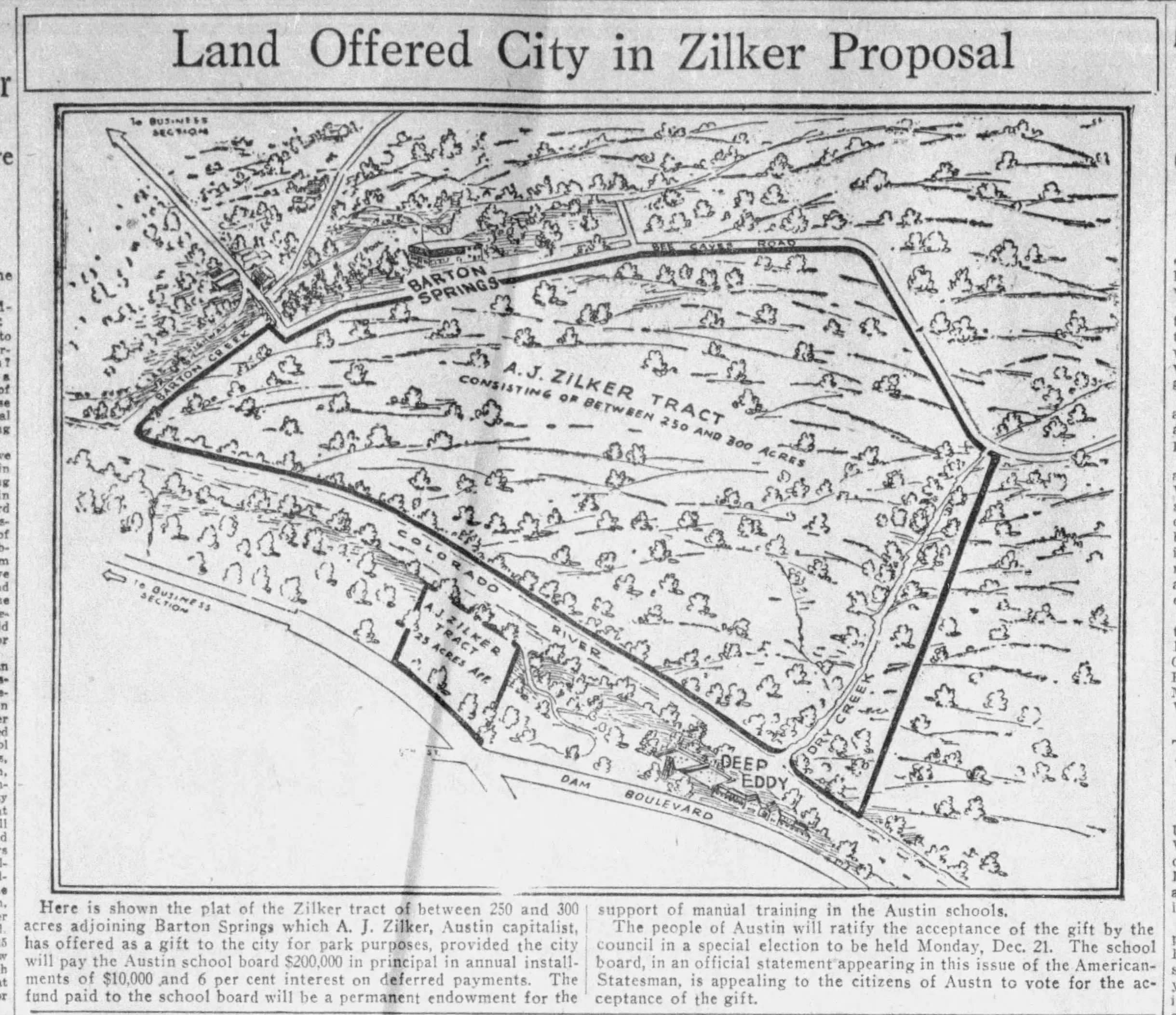
His gifts culminated in 1934 with the donation of the site where the Girl Scout Cabin now stands. That same year the park was officially named Zilker Park, and Andrew Zilker died. In 1997 the park was added to the National Register of Historic Places as the Zilker Park Historic District.
His vision for the park
"Ought to belong to all the people of Austin."
It is a short sentence and a big promise. For much of the 20th century, Barton Springs was segregated, and the park did not yet belong to everyone the way his words describe. Its fuller story includes the people who fought for equal access to these waters, like Azie Morton, and the Indigenous communities who gathered at the springs for thousands of years before Zilker ever arrived.
His words are also where Zilker 351 begins. Our vision reads: "To honor Andrew Zilker's statement that Zilker Metropolitan Park 'ought to belong to all the people of Austin,' Zilker 351 envisions a park that welcomes all visitors to experience its natural beauty, vibrant programs, and recreational opportunities, and to become stewards of the park for current and future generations."
Zilker Park is still public parkland, managed and operated by Austin Parks and Recreation (APR). Zilker 351 is a nonprofit that works to honor, preserve and enhance it, so that his promise keeps reaching more of the people of Austin.
Keep reading
- The Coolest Thing About Zilker Park: the fuller story of Zilker's ice business and how Barton Springs water helped build it.
- Zilker History: 10,000 years of stories, from the first inhabitants to today.
- About Zilker Park: the park's history, ecology and recreation across 351 acres.