The Coolest Thing About Zilker Park
If you've stood in line at Barton Springs Pool on a hundred-degree August afternoon, waiting your turn to drop into that 68-degree water, you've unknowingly paid tribute to a man who made his fortune doing the exact opposite of what nature intended in Texas summers: he made things cold.
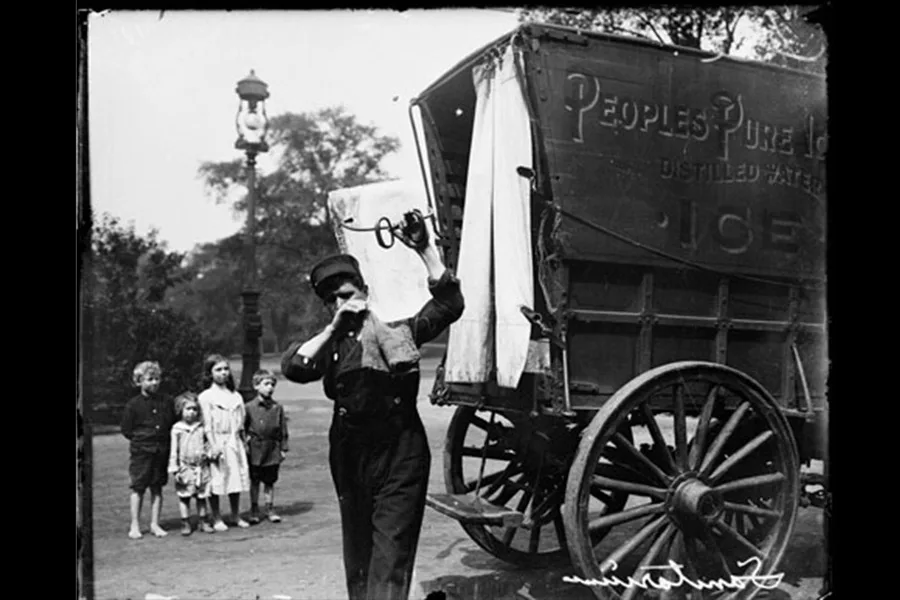
The story goes that Andrew Jackson Zilker arrived in Austin in 1876 as an eighteen-year-old with fifty cents in his pocket. He started out washing dishes at local restaurants, then landed a job at a riverside ice factory. Within three months, he wasn't just working there — he was leasing the whole plant. By 1885, backed by John T. Brackenridge, he'd renamed the operation Lone Star Ice Works, and it grew into one of the most successful businesses in the state at a time when "artificial ice" was still viewed with suspicion by much of the public, who trusted only "natural" ice, actual frozen lake blocks shipped down from the North by rail in sawdust-packed cars. Zilker won people over with a stunt: he lined up chunks of that shipped-in natural ice on one side of Congress Avenue and his manufactured ice on the other, and let onlookers watch the natural ice melt into puddles long before his did.
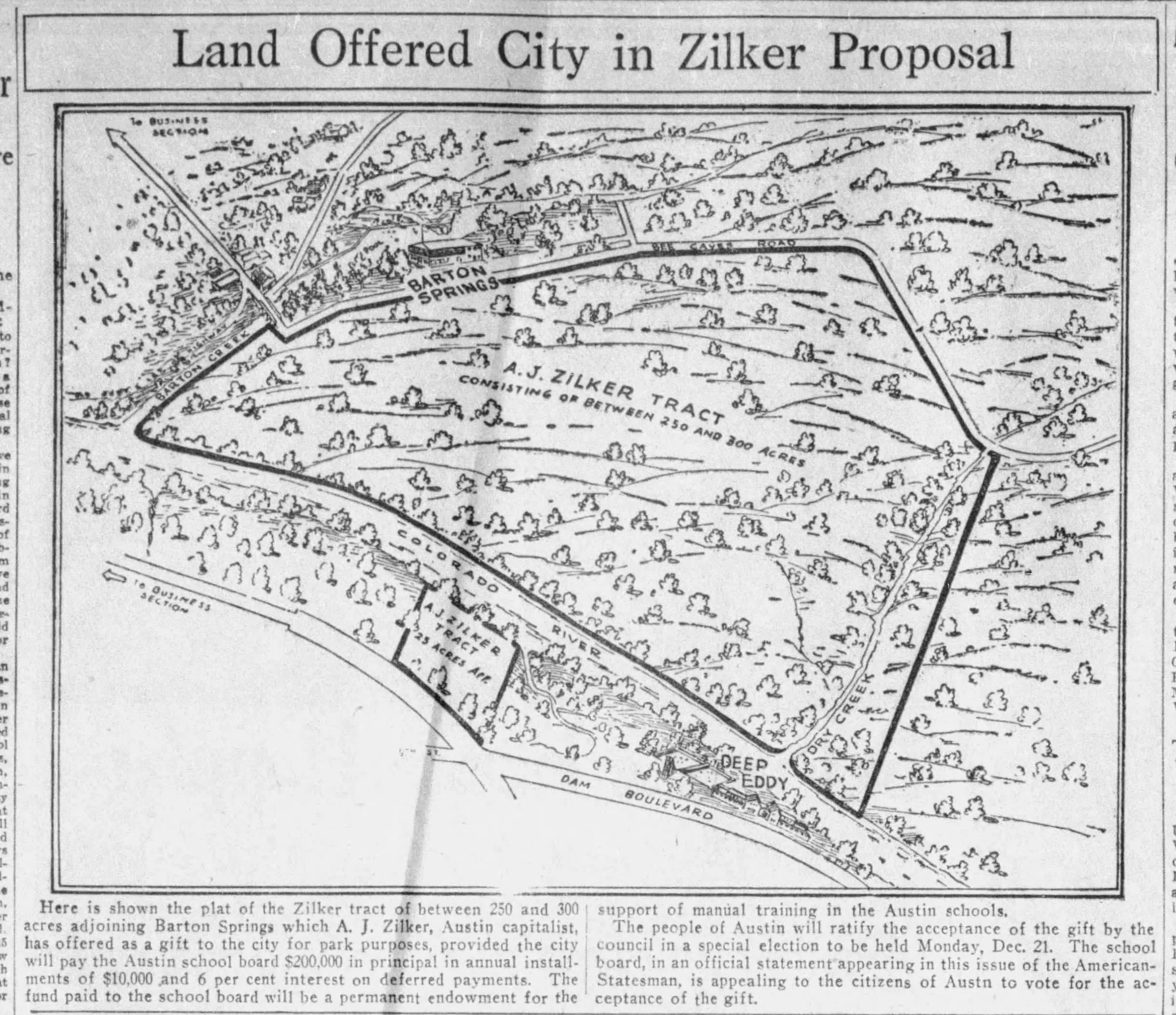
In the early 1900s, Zilker bought the 350-acre floodplain along the Colorado River and Barton Creek that included Barton Springs. He put the fertile land to practical use, raising hay there to feed the horses that powered his ice business — and the ice itself was made from the cool waters of Barton Springs. The same spring that cools off thousands of Austinites every summer today is the water that helped build his fortune a century ago.
Zilker was also Austin's first Coca-Cola bottler, running the first Coca-Cola distribution and bottling plant in Central Texas. Picture it — a hundred-degree afternoon, a warm glass of fizzy Coca-Cola, and a man dropping in his own ice, made from his own springs, to cool it down. It's hard to imagine a more on-the-nose founder's story for a park that, to this day, is where Austin goes to beat the heat.
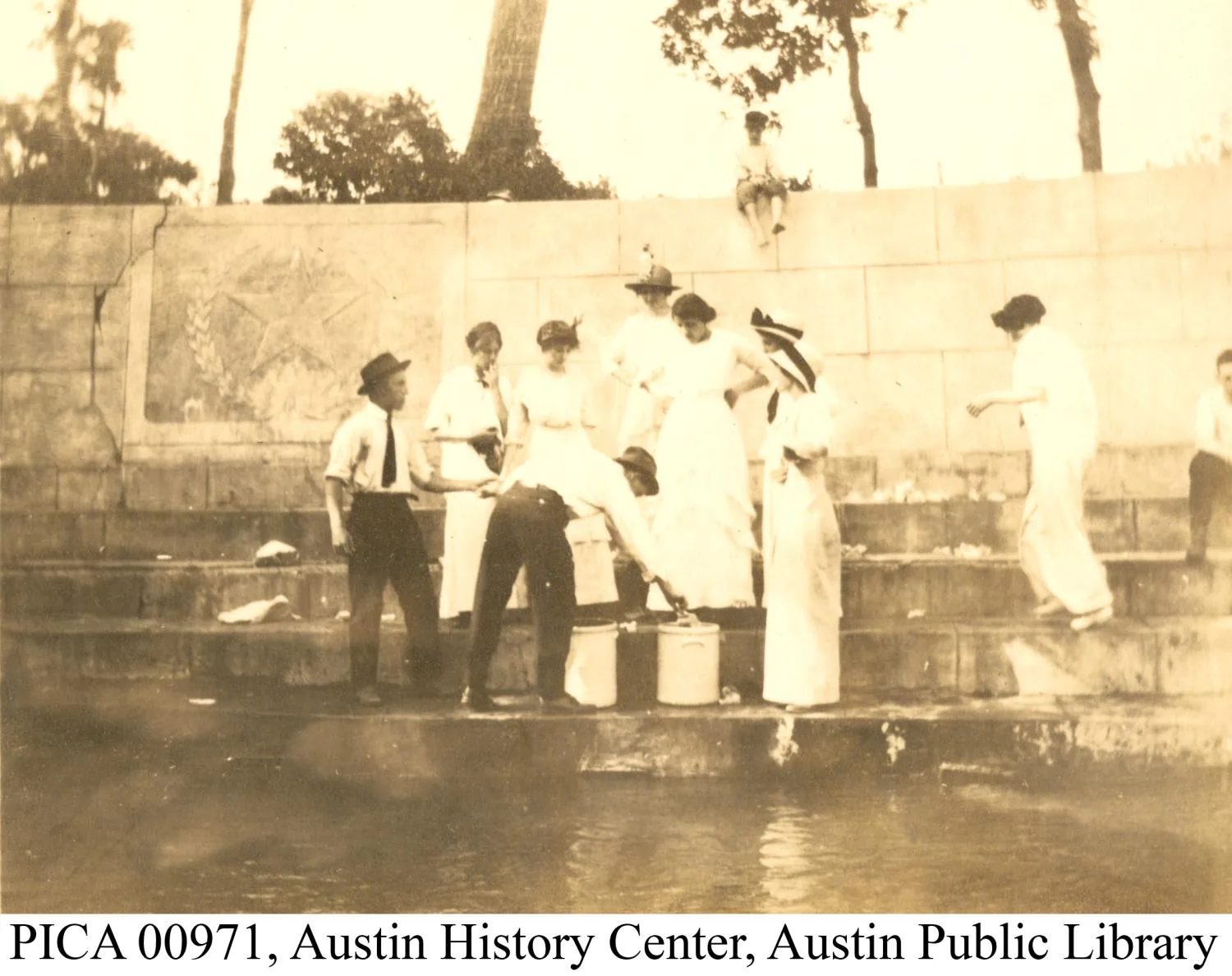
Zilker also built a pool and an amphitheater at what’s now known as Eliza springs for his fellow Elks Club members, previewing the recreational use Barton Springs is known for today. (Today Eliza Springs is closed for use as it is critical habitat for the endangered Barton Springs salamander.) Zilker gifted the land to the Public School System with the intent for them to in turn sell the property to the City of Austin with a stipulation attached: the proceeds had to fund shop and home economics classes in Austin's public schools. That transaction created a $100,000 fund that still today funds a school-to-work program for Austin Independent School District, and the City of Austin, of course, turned the land into a park. The park was officially named Zilker Park in 1934, the same year he died, and in 1997 it earned a spot on the National Register of Historic Places.
So the next time you're melting in an Austin August and you head to the springs to cool off — or crack open a cold drink with ice in it — it's worth remembering: the park's namesake spent his career doing exactly that, just at industrial scale, one block of ice and one bottle of Coke at a time.