
Before the Pool: The First People of Barton Springs
Barton Springs has flowed for thousands of years, a lifeline for both people and wildlife. Many regulars call it the “soul of Austin.” At the pool, water in beautiful hues emerges from cracks in the limestone just to the right of the diving board. Hydrostatic pressure forces it to the surface, and you’re looking at the ancient workings of the Barton Springs segment of the Edwards Aquifer. Long before Austin existed, Indigenous communities frequented this area. One origin story holds that the springs were created when the Great Spirit drove a rainbow into the rock with such force that it shattered, sending water bursting forth, carrying the colors of the rainbow.
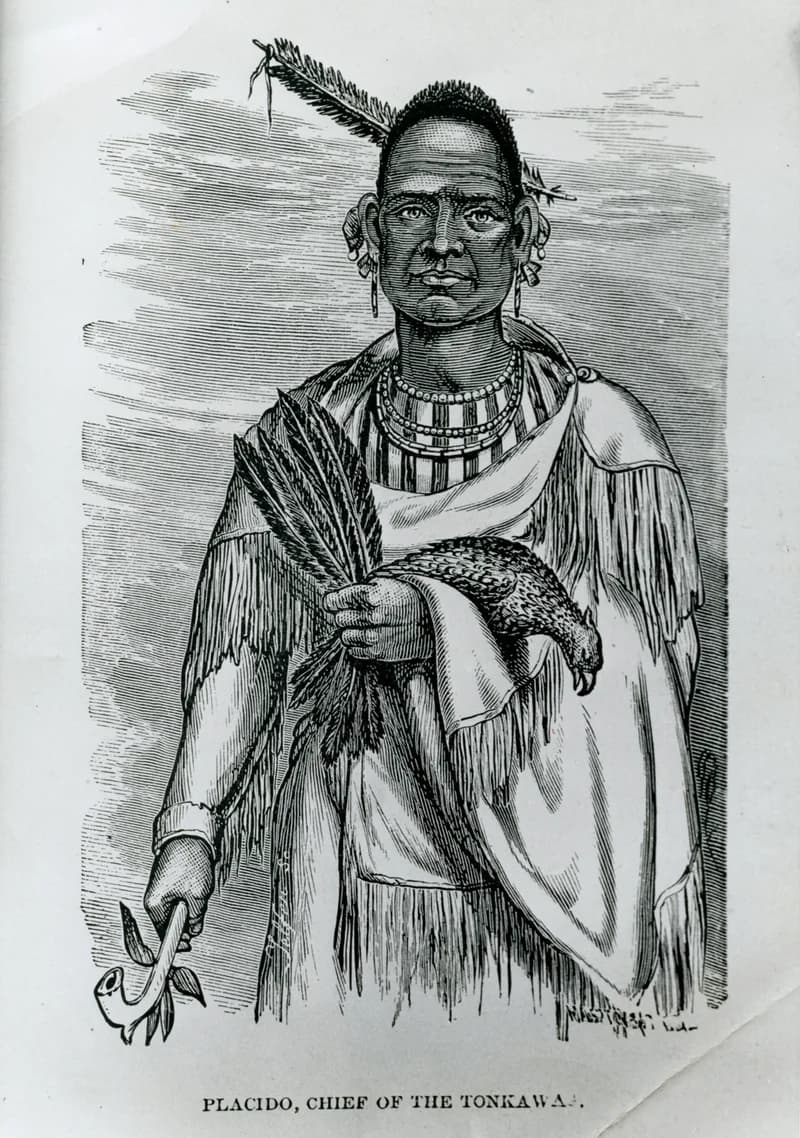
People have been coming to this water for more than 13,000 years, according to the archaeological record. Reliable spring water and a fertile landscape drew them. These early settlers camped along the Colorado River on what is now the Great Lawn. They left behind stone tools and fire pits, and floods later buried the campsites under layers of soil that preserved them. Now known as the Vara Daniel site, the campsites have not been fully explored because they lie deep underground. Historical records place many tribes, including the Comanche, Tonkawa, Caddo, Lipan Apache, and Coahuiltecan, among others, in the area.
In 1837, William Barton established his home near the springs that now bear his name. He arrived in Texas with enslaved workers, and his life was tied to violent frontier conflict and the displacement of Native peoples. He lived here during the Republic of Texas, the independent nation Texas was from 1836 until it joined the United States in 1845. Many of the tribes that lived here were killed or forcibly removed in those years, and President Mirabeau B. Lamar (1838–1841) called for “an exterminating war” on Native warriors.
Fortunately, Texas’s Indigenous people did not disappear. More than 700,000 Texans identify at least in part as Indigenous, according to the 2020 Census. About 7,000 identify as Coahuiltecan, a count that is hard to pin down because many ancestors assimilated into Mexican and Hispanic cultures. In 1998, a year after the Barton Springs salamander was listed as endangered, Gary Perez, a professional diver, was asked to help clean Barton Springs Pool. He worked with the U.S. Fish and Wildlife Service and the City of Austin on a way to protect the salamander. He saw the project as a chance for Native Americans to help solve the problem, and says the work connected him and his community to the springs. For him, the water’s health and ceremony are inseparable: “Unhealthy water means no salamander, no ceremony, and no star shining.”
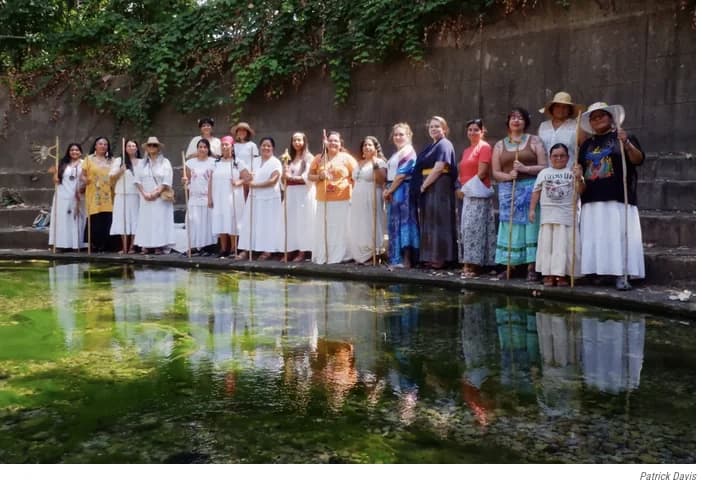
Today, Barton Springs continues to serve as a site for sacred ceremonies. Every August, a group of mostly women led by Perez’s wife, Matilde Torres, makes a pilgrimage to four sacred springs: San Antonio, San Marcos, Comal, and Barton. They start at San Antonio Springs at dawn, commune with the water and pray at each spring, and end at Barton Springs in the afternoon. At Eliza Spring, which is fenced off to protect the endangered Barton Springs and Austin blind salamanders, Indigenous community members have special permission to gather, pray, and collect water for ceremonies. Emi Aguilar, a Coahuiltecan community member, calls Barton Springs a historical “place of gathering, and friendship” for her people.
This Indigenous People’s Day, Zilker 351 shares this history with care and acknowledges the pain caused by his exploitation of the enslaved and the Native nations whose lands and lives were deeply affected.