
Roots Run Deep: Why Wildflowers and Native Grasses Are Central Texas Super Heroes
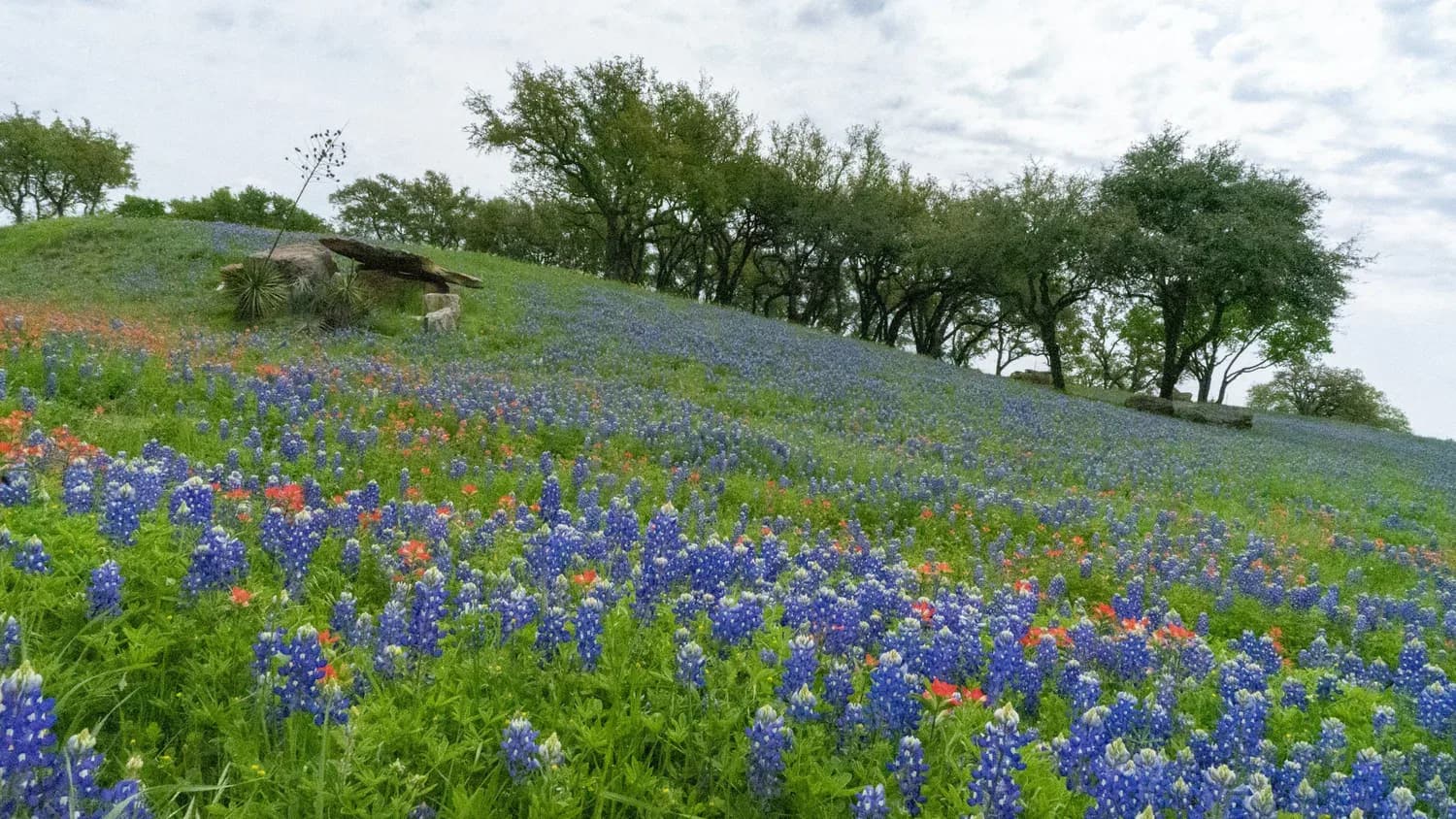
Every spring, Central Texas puts on one of nature's most spectacular shows — roadsides blaze with bluebonnets, Indian paintbrush, and Mexican hat, and meadows ripple with little bluestem and sideoats grama catching the breeze. It's beautiful, sure, but the story underneath that beauty is even more remarkable. These plants aren't just pretty. They're quietly doing some of the most important ecological work in our region — and they need our help to keep doing it.
More Than a Pretty Patch
Native wildflowers and grasses evolved alongside Central Texas soils, insects, and wildlife over thousands of years, creating intricate, interdependent relationships. A single patch of native plants can support dozens of specialist bee species — insects that cannot survive on any other food source. Monarch butterflies, now listed as endangered, depend on milkweed species native to this region. Songbirds rely on the seeds of native grasses like Indiangrass and buffalo grass to fuel fall migration. Remove the natives, and those food webs don't just weaken — they collapse.
This is biodiversity in action: not just variety for variety's sake, but a resilient, interlocking system where each species reinforces the health of the whole. A landscape full of native plants is one that can withstand drought, pest pressure, and disease far better than a monoculture lawn ever could.
The Ground Beneath Our Feet
Here's where native plants become genuinely extraordinary. While a typical turf grass lawn has roots reaching 6 inches into the soil, native grasses like big bluestem send roots 6 to 15 feet deep. Those deep roots do two things that matter enormously in Central Texas.
First, they absorb and slow rainfall, dramatically reducing runoff and flood risk. When a summer thunderstorm drops two inches in an hour — as it does here with alarming regularity — a native landscape acts like a sponge, capturing water and slowing its movement across the surface. Conventional turf and pavement, by contrast, shed that water directly into creeks and storm drains, increasing flood peaks downstream.
Second, those deep roots maintain soil structure and porosity, allowing water to percolate slowly down through the limestone karst toward the Edwards Aquifer — the underground reservoir that provides drinking water for nearly 2 million people in Central Texas. This matters especially close to home: Zilker Park sits directly over the Barton Springs segment of the Edwards Aquifer, the same underground reservoir that feeds iconic Barton Springs Pool just steps away. Every wildflower meadow and native grass planting in the park helps rainfall slow down and seep into that recharge zone rather than rushing off as runoff. The recharge zones feeding that aquifer depend on permeable ground and healthy plant cover. Native plantings, whether in a backyard, a park, or along a creek corridor, contribute to the long-term replenishment of that irreplaceable resource.
Why Fall Is the Magic Window
If you've ever tried to grow bluebonnets from seed with disappointing results, timing is likely the culprit. Fall — specifically October through early December — is the critical planting window for most Central Texas wildflowers and many native grasses. Here's why.
Most native seeds are programmed to germinate only after experiencing a period of cool, moist conditions — a process called cold stratification. When you sow seeds in fall, they sit through winter in the soil, receiving exactly the environmental cues they need to break dormancy and sprout vigorously in spring. Plant in March and you've skipped the instruction manual.
Fall planting also allows perennial grasses and transplanted wildflowers time to establish root systems before the brutal heat of a Texas summer arrives. A plant that spent winter quietly building roots is far more drought-tolerant by July than one scrambling to establish in April.
What "Overwintering" Really Means
Many gardeners see a dormant native plant — brown, seed-head-rattling, seemingly dead — and feel the urge to cut it back. Resist that urge. Overwintering is the process by which native plants survive cold months, often retreating energy into root systems while stems and leaves die back above ground. That "dead" standing material is actually critical winter habitat: hollow stems shelter native bees, seed heads feed goldfinches and white-throated sparrows, and leaf litter insulates soil and overwintering insects.
Come March, those same plants will re-emerge with remarkable energy — drawing on a root system that spent four months expanding — ready for another season of pollinating, flood-buffering, aquifer-recharging work.
In Central Texas, native plants aren't just a landscaping choice. They're infrastructure.
Zilker 351 Newsletter | Spring 2026